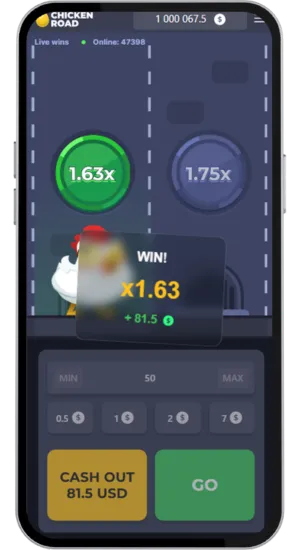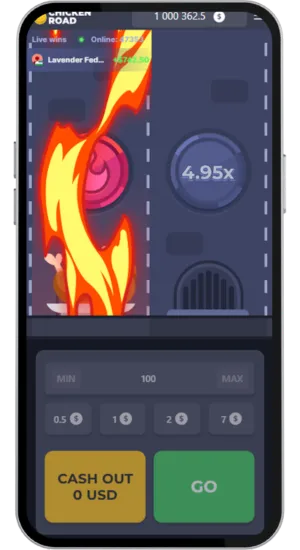
Chicken Road is built around short rounds, a fixed 98% RTP, and step-based decisions where timing directly affects the outcome. Developed by InOut Games, the game increases the multiplier with every move, forcing players to choose when to cash out. In the official New Zealand version, potential wins can reach up to 16,500 NZD.
Top-Rated Chicken Road Casino Websites
Below is a selection of top-rated casinos where Chicken Road is available for New Zealand players. These platforms were compared based on licensing, payment options, and game performance. The list includes only casinos with access to the official version of the game.









Overview of Chicken Road
Chicken Road is a compact crash-style game built around fast outcomes and player-controlled risk. Each round lasts only a few seconds, allowing quick decisions and frequent cash-out points without pauses between turns. The game runs consistently on both desktop and mobile devices, using the same mechanics across all platforms.
| Feature | Details |
| Game Type | Crash-style game (step multiplier) |
| Provider |  |
| RTP | 98% |
| Volatility | High |
| Maximum Win | Up to 16,500 NZD |
| Minimum Bet | 1 NZD |
| Maximum Bet | 300 NZD |
| Game Modes | Easy / Medium / Hard / Hardcore |
| Average Round Time | ~11 seconds |
| Cash-Out System | Manual (player-controlled) |
| Gameplay Mechanics | Step forward to increase the multiplier, cash out before the flame |
| Fairness System | Provably fair |
| Platforms |  Desktop Desktop Android Android iOS iOS |
Chicken Road runs on short, continuous rounds with a fixed 98% RTP. This structure supports fast session pacing and frequent cash-out points without pauses between rounds.
Who Chicken Road Is For — and Who It Is Not
Chicken Road slot is designed around fast decision-making and visible risk. Each round ends quickly, there are no delayed outcomes, and the result depends entirely on when the player chooses to exit. This structure makes the game suitable for certain play styles, while others may find it too direct or unforgiving.
Best suited for
- Players who prefer short, controlled sessions
- Those who like making frequent manual decisions
- Users who track risk rather than chase long features
- Players comfortable with fast outcomes
- Those who set clear entry and exit points
- Players who value visible probabilities
May not suit players who
- Prefer long bonus sequences
- Expect passive or automated play
- Look for extended feature progression
How to Start Playing
Starting a round in Chicken Road takes only a few seconds and requires no setup beyond choosing risk level and bet size. The game works the same in free mode and real money mode, so players can test mechanics first and switch later without changes.
- Select Difficulty
Choose a difficulty level that defines the number of steps and risk intensity.

- Set Your Bet
Pick a stake starting from 1 NZD. The amount remains fixed for the entire round.
- Press “Play”
Confirm the bet and begin the round. The multiplier starts increasing immediately.
- Move Forward
Each jump raises the multiplier. Every step increases risk.
- Cash Out
Cash out at any moment to secure the current win before the flame ends the round.





Chicken Road gives the player full control over each round. There are no automatic stops, forced bonuses, or hidden conditions. The round ends only when the player decides to cash out or continues until failure, making the game suitable for short sessions, demo testing, and controlled real money play.
The demo version uses the same probability model as real money play. Difficulty levels, step behaviour, and cash-out timing remain unchanged, allowing players to test decisions without financial pressure.
Common mistakes new players make
New players often approach Chicken Road as a fast way to chase high multipliers, underestimating how quickly risk accumulates. Because rounds are short and decisions happen rapidly, small mistakes compound faster than in many other crash-style games.
| Common mistake | Practical adjustment |
| Staying in a round too long | Set a target multiplier before the round starts and exit when it is reached |
| Increasing bet size after a loss | Keep bet size consistent to avoid emotional escalation |
| Chasing extreme multipliers | Focus on early exits instead of rare high outcomes |
| Playing continuously without breaks | Pause after losses to reset decision-making |
| Switching difficulty randomly | Change difficulty only with a clear session plan |
| Ignoring session limits | Decide on a stop point before starting to play |
| Treating demo and real play differently | Use demo mode to test decisions exactly as you would with real stakes |
Most losses come not from the probability model itself, but from poor session structure. Failing to set limits, reacting emotionally after losses, or ignoring pacing usually leads to unnecessary balance drain. The table below outlines the most common issues and practical ways to avoid them.
Which Difficulty Level Should You Choose?
Each difficulty level in Chicken Road changes how quickly risk increases and how high the multiplier can climb. All four modes are available in demo play, allowing players to compare pacing, loss probability, and multiplier growth before switching to real money rounds. The key difference between modes is not speed, but how early mistakes are punished.
Easy — 24 stages
Loss chance: 1 out of 25
Multiplier range: x1.02 – x24.5
Used for testing mechanics, slower progression, and conservative play.
Medium — 22 stages
Loss chance: 3 out of 25
Multiplier range: x1.11 – x2,254
Balances higher multipliers with controlled cash-out decisions.
Hard — 20 steps
Loss chance: 5 out of 25
Multiplier range: x1.22 – x52,067.39
Short sessions with frequent losses and rare high returns.
Hardcore — 15 stages
Loss chance: 10 out of 25
Multiplier range: x1.63 – x3,203,384.8
Extreme risk mode where most rounds end quickly.
Hardcore mode exists for players who deliberately accept a high chance of total loss. As multipliers grow, the probability of failure rises sharply, making timing and discipline critical.
Chicken Road: 100 Spins Session Review
A focused 100-round session was conducted to evaluate pacing, multiplier growth, and balance movement under consistent conditions. The session started with a deposit of NZD 100.00, using a fixed NZD 1 stake per step throughout the test. The objective was not to chase extreme outcomes, but to analyse decision timing, round frequency, and short-term volatility patterns.
Steps 1–20
Warm-up segment focused on early exits. Most rounds ended quickly with small, controlled cash-outs and minimal overextension.
Steps 21–40
A faster pace with a few extended attempts. Early multipliers landed often, but several late-step failures pulled the line down.
Steps 41–60
Conservative reset: shorter runs and stricter exit targets. Losses slowed as decisions stayed consistent across rounds.
Steps 61–80
Strongest stretch of the session. A couple of well-timed exits after deeper steps recovered the balance and restored momentum.
Steps 81–100
Final segment stayed disciplined with fewer “one more step” decisions. The session closed slightly above the starting point.
Chances of Winning in the Chicken Road Game
Chicken Road uses a clearly defined multiplier model, so expected outcomes are easy to understand. The probability behind each jump is transparent and follows the same pattern in every round of the game.
| Multiplier | Win Chance |
| x1.03 | 95.14% |
| x1.12 | 87.5% |
| x1.23 | 79.6% |
| x1.47 | 66.6% |
| x1.63 | 60% |
| x1.98 | 49.5% |
| x4.95 | 19.7% |
| x1000 | 0.098% |
The table shows how probability drops as multipliers increase. While early cash-outs remain statistically stable, higher multipliers come with sharply reduced win chances. This structure encourages early exits over long runs, especially during high volatility sessions.
Each step in Chicken Road follows a fixed probability model. Risk is adjusted manually by choosing when to continue or cash out, allowing strategy changes based on balance size or target payout.
How to Win?
Chicken Road is built around reaction speed and predefined probabilities. The player cannot influence how long a round lasts the only controllable decision is when to cash out. Every step increases potential payout while raising the risk, which makes timing more important than chasing high multipliers.
Practical strategies used by experienced players:

- Start slow
Begin with small bets and increase stakes only after several stable rounds without losses. - Use lower multipliers during downturns
Cashing out early (around x1.2–x1.4) helps limit losses when volatility rises. - Pause after losses
Skipping one round after a failed attempt reduces the risk of repeated mistakes. - Rotate difficulty modes
Switching difficulty every 10–15 rounds helps avoid predictable play patterns. - Watch unstable tiles
Sequences with frequent flame or cross symbols tend to end rounds faster. - Set a session limit
Decide on a win target in advance and stop playing once it is reached.
Players who follow structured risk control and avoid impulsive decisions tend to preserve more of their balance over time compared to random play.
These approaches do not change the base probabilities, but they help structure play and limit uncontrolled losses.
Chicken Road vs Chicken Road 2
Chicken Road and Chicken Road 2 use the same step-based crash structure, but differ in pacing and multiplier progression. These differences influence risk escalation and session length rather than gameplay rules. The table below outlines where these variations become noticeable in practice.
| Feature |
 |
 |
| Mechanics Same | Step-based crash format | Step-based crash format |
| Cash-out control Same | Manual cash-out | Manual cash-out |
| Demo play Same | Available | Available |
| Round pacing | Faster, more compact rounds | Slightly longer rounds |
| Multiplier progression | Steady and predictable | More aggressive at later steps |
| Risk escalation | Gradual increase | Sharper increase after mid-steps |
| Best suited for | Short, controlled sessions | High-risk, high-variance attempts |
Final thoughts on Chicken Road
Chicken Road focuses on timing rather than complexity. The game removes distractions and places all responsibility on the player’s decisions. For New Zealand players looking for fast rounds with visible risk and manual control, it offers a clear and predictable structure.
Timing over waiting
Long runs rarely pay off. Stable sessions come from early, deliberate exits rather than chasing extreme multipliers.
Risk stays visible
Every step clearly increases exposure. Nothing happens in the background, which makes exit decisions easier to judge.
Sessions end naturally
Fast rounds create clear stopping points. Short sessions feel finished without pressure to continue or recover losses.
Chicken Road Discussions from Reddit
Kiwi players on Reddit share tips for Chicken Road, emphasizing small NZD bets and early cashouts to avoid balance burns, with many noting consistent 10–20x multipliers in licensed NZ casinos. Experiences vary from quick wins to long sessions, but the consensus is to treat it as hit-and-run gameplay for sustainability.
Similar Crash-Style Games
Players who enjoy Chicken Road may also be interested in other crash-style titles built around manual cash-out mechanics and rising multipliers. These games focus on timing, visible risk progression, and short round formats rather than traditional slot features.



In-Game Screenshots